
What does the Illinois anti-scald shower valve rule require?
Updated
Short answer
Part of Shower Replacement.
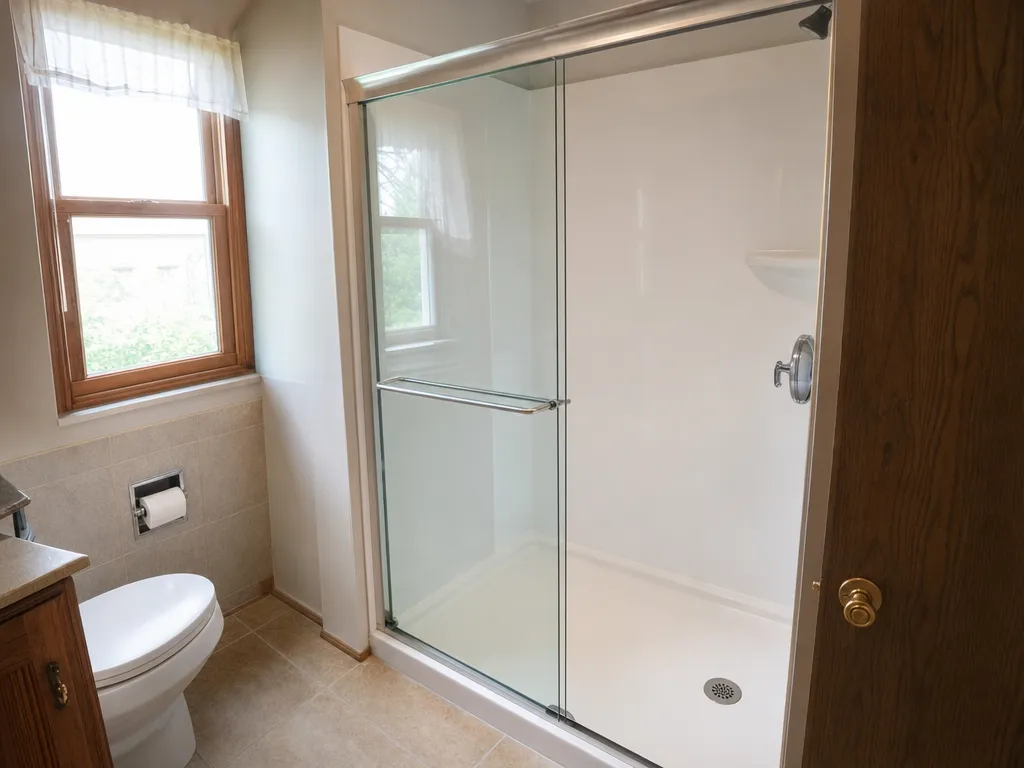
This is the code rule that touches almost every shower job. If the old valve stays, nothing changes. If the valve is replaced, and it usually is in a shower replacement or a tub-to-shower conversion, the new one has to meet it.
The rule
Illinois State Plumbing Code, 77 Ill. Adm. Code 890.690
“All shower compartments and shower-bath combinations shall be provided with an automatic safety water mixing device to prevent sudden unanticipated changes in water temperature or excessive water temperatures. ... The automatic safety water mixing device shall be adjusted to a maximum setting of 115 degrees Fahrenheit at the time of installation.”
Three parts of that matter. It covers shower-bath combinations, not only stand-alone showers. It caps the setting at 115 F at the time of installation. And the code adds that a water heater thermostat is not an acceptable substitute, so “I keep my water heater low” does not count.
Pressure-balancing or thermostatic
The code accepts either type. Its listed standards are ASSE 1016 for pressure-balancing valves and ASSE 1017 or 1070 type devices for thermostatic control.
- Pressure-balancing valve. The common single-handle valve. It reacts when the hot or cold pressure drops, for example when someone flushes a toilet, so the mix does not swing to scalding. It is the type the Cost vs. Value midrange bath project specifies.
- Thermostatic valve. Holds a set temperature rather than a pressure balance, and often has separate controls for temperature and flow. It is the type in the universal design bath project in the same report, and it costs more.
Either way, the installer sets the limit stop on the valve so the handle cannot go past the safe maximum. That adjustment is part of the job, and it is worth checking at the walkthrough: run the shower all the way hot and feel where it stops.
Why it matters in older houses
In Rockford, 46.5% of homes were built before 1960 (Census ACS, 2020 to 2024). Many original bathrooms have two-handle valves with no pressure balancing at all. Replacing the shower means replacing that valve with one that meets the rule, which is also why a valve change brings a plumbing permit in towns like Rockford. The permit guide has each town's wording.
Is your current shower already compliant?
A shower installed before the rule, or with a two-handle valve, may not have a safety mixing device at all. Two quick checks: a single handle that controls both temperature and flow is often a pressure-balancing valve, and a valve that holds steady when someone flushes a toilet nearby is doing its job. A sudden hot or cold swing during a flush means it is not. Neither check tells you the limit setting, so if the shower can get painfully hot, have a plumber look at the valve and its limit stop. Anyone in the house who is very young, older or slow to react to heat benefits most from a properly set valve.
Who sets it
Installing a shower valve is plumbing. In Illinois that means a licensed plumber, or the owner who lives in a single-family home doing their own work.
225 ILCS 320/3
“All planning and designing of plumbing systems and all plumbing shall be performed only by plumbers licensed under the provisions of this Act hereinafter called "licensed plumbers" and "licensed apprentice plumbers".”
Rockford's water and the valve
Groundwater supplies Rockford and the towns around it. The city's 2025 water report lists iron at low levels but does not publish hardness. Mineral scale is a common reason cartridges in older valves stick, which is one more reason the valve is usually replaced rather than reused. The hard water guide covers it.
What it costs
The valve is part of the shower job, not usually a separate line in the cost guides. Angi puts a shower installation or replacement at $4,448 to $12,373 (Angi, shower installation cost, national, updated October 13, 2026), and notes new plumbing on a shower remodel at a few hundred to a few thousand dollars. The full list is on the bathroom remodel cost page.
Sources: Illinois State Plumbing Code, 77 Ill. Adm. Code 890.690 (showers); Illinois Plumbing License Law, 225 ILCS 320/3; Angi, shower installation cost; Angi, shower remodel cost; Cost vs. Value 2025, Chicago (JLC / Remodeling); City of Rockford, Mechanical and Plumbing Permits; City of Rockford, 2025 Consumer Confidence Report; U.S. Census Bureau, ACS 2020-2024 5-year, via Census Reporter
Quick answers
What temperature does Illinois require for shower valves?
The automatic safety mixing valve has to be set to a maximum of 115 F when it is installed, under 77 Ill. Adm. Code 890.690(b).
Is a pressure-balancing valve required in Illinois?
An automatic safety mixing valve is required. A pressure-balancing valve meets it, and so does a thermostatic one. Either has to be set to 115 F at most.
Can I just turn down my water heater instead of an anti-scald valve?
The Illinois Plumbing Code says a water heater thermostat is not an acceptable alternative. The shower itself needs the mixing valve.
Does a tub with a shower head need an anti-scald valve?
Shower-bath combinations are named in the rule, so a tub with a shower needs one too when the valve is installed or replaced.
Do I need a permit to replace a shower valve in Rockford?
Replacing a valve is a plumbing alteration, and Rockford requires a plumbing permit for that. Only same-location fixture swaps that change no trap or piping are exempt.
Planning a bathroom?
Tell us which bathroom, what you want changed and anything you have noticed. We reply with a price first.