Should You Keep at Least One Bathtub?
Updated
Short answer
Part of Tub-to-Shower Conversions.
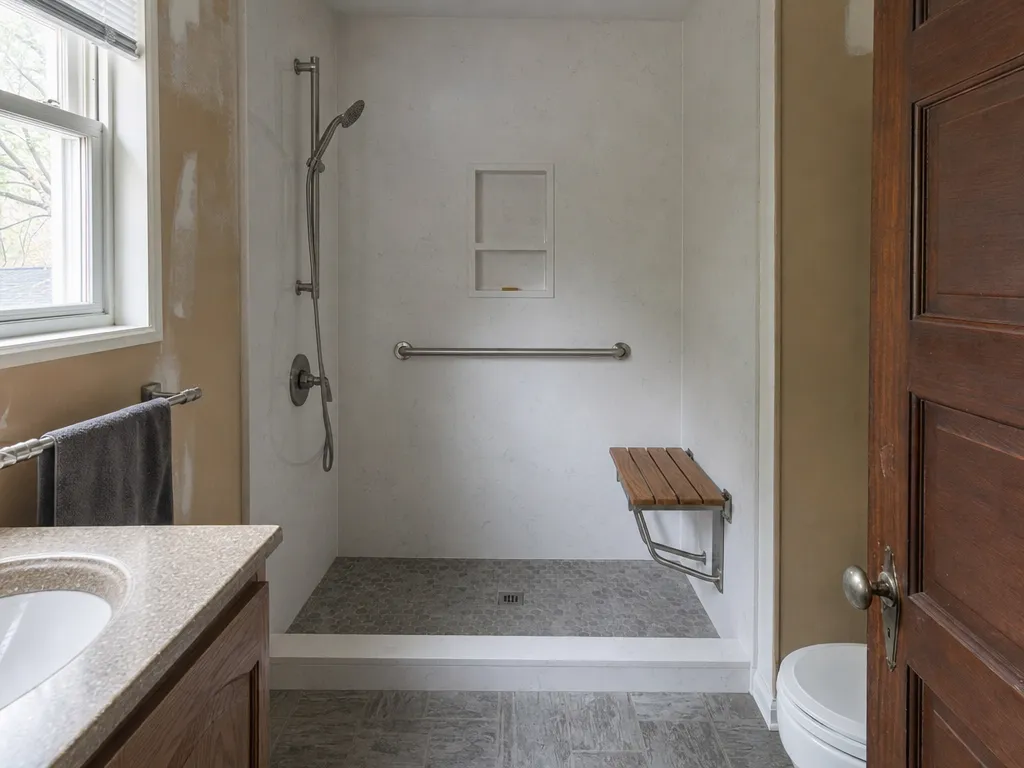
The tub-to-shower conversion is one of the most requested bathroom jobs, and the question that comes with it is always the same: will I hurt my resale by losing the tub? Here is what we can and cannot tell you from real data. The conversion itself is on our tub-to-shower conversion page.
What the data does and does not show
The best regional figure is the Cost vs. Value report, which prices a standard bathroom remodel in Chicago, the closest metro it covers. Its midrange bath job is a 5 by 7 foot room that keeps a tub:
Typical price, national and Chicago
- Midrange bath remodel, Chicago: $24,072. Cost vs. Value 2025, Chicago (JLC / Remodeling), 2025 report.
5x7 bath: new tub with tile surround, pressure-balanced valve, vanity, tile floor. Resale value $15,985 (66.4% recouped).
That job cost $24,072 and returned 66.4% of its cost in resale value. The report does not price the same room without a tub, so it says nothing about whether removing one costs you. We looked, and no source we trust measures a resale penalty for a house with no tub. Anyone who quotes you a percentage for that should be able to show where it came from.
So the honest answer is that it depends on your house and who is likely to buy it, not on a rule of thumb.
Who still uses a tub
Two groups decide this. Families with small children usually want a tub for bath time. And many older owners want the opposite: a shower they can walk into without stepping over a tub wall.
Around here the second group is large. Across Winnebago County, 34.7% of owner households are headed by someone 65 or older, 26,511 households in all. In Rockford the share is 35.2%. The highest share among area towns is Lake Summerset, at 57.9%. Those are the owners most likely to ask for a conversion, and many of them plan to stay put.
A simple way to decide
- You have two full baths: converting the one you use most and leaving a tub in the other covers both kinds of buyer.
- You have one full bath and plan to stay for years: build it for how you live now. A step-over that is already hard will only get harder.
- You have one full bath and may sell soon: a refreshed tub with a good surround is the safer bet for a buyer with kids.
- You want both in one room: some baths fit a soaking tub and a separate shower. That is usually a larger primary bath project.
If you keep the tub, make it easier to live with
Keeping a tub does not mean keeping the hard parts. A few changes take most of the risk out of a tub-shower combination:
- a grab bar on the long wall, set into framing, not just drywall anchors;
- a handheld shower on a slide bar, so you can sit on a tub bench and rinse;
- a slip-resistant tub floor or mat;
- a new anti-scald valve, which any new valve has to be anyway.
Those changes are small next to a full conversion, and they buy time. If the step-over becomes the problem later, the conversion can still happen then.
What a conversion actually involves
The tub comes out, the drain usually moves a short way to suit a shower base, the valve is replaced, and new walls and a door or glass panel go in. Moving the drain is plumbing work that needs a permit in Rockford even though a same-spot fixture swap does not. A prefab base and walls can go in quickly; a tiled shower takes longer. See how long a bathroom remodel takes.
What each path costs
Here are the national ranges for the two main choices. See the cost page for every job in one table.
Typical price, national
- Tub-to-shower conversion (Angi): $1,200 to $15,000. Angi, tub-to-shower conversion cost, updated July 8, 2026.
- Tub-to-shower conversion (This Old House): $2,000 to $12,000. This Old House, tub-to-shower conversion cost, updated March 4, 2026.
- Bathtub replacement (Angi): $2,104 to $9,756. Angi, bathtub replacement cost, updated October 20, 2026.
A tub replacement averages $5,929 on Angi's numbers. If you keep the tub, see our bathtub replacement page.
If you convert, size it right
A standard alcove tub is about 5 feet long, so a converted shower usually has plenty of room. The Illinois Plumbing Code still sets a floor size for any new shower:
The minimum shower size in Illinois
“Single family shower compartments or stalls shall have at least 1,024 square inches outside dimension (OD) floor area and shall be at least 32 inches in shortest outside dimension.”
Any new shower valve also has to be an anti-scald type set no hotter than 115 F. Both are covered in minimum shower size in Illinois and the anti-scald valve rule.
Sources: Cost vs. Value 2025, Chicago (JLC / Remodeling); Angi, tub-to-shower conversion cost; This Old House, tub-to-shower conversion cost; Angi, bathtub replacement cost; Illinois State Plumbing Code, 77 Ill. Adm. Code 890.690 (showers); U.S. Census Bureau, ACS 2020-2024 5-year, via Census Reporter
Quick answers
Does removing the only bathtub hurt resale value?
No source we trust measures a resale penalty for a house with no tub. It depends on who is likely to buy: families with small children usually want a tub, and many older buyers prefer a walk-in shower.
How much does a tub-to-shower conversion cost?
Angi puts it at $1,200 to $15,000 and This Old House at $2,000 to $12,000, both national figures. See the cost page for the full list.
Is it better to have a tub or a shower in a hall bath?
In a house with one full bath, a tub with a shower over it suits the most buyers. In a house with two, many owners convert one and keep a tub in the other.
What is cheaper, a new tub or a tub-to-shower conversion?
A tub replacement averages $5,929 nationally (Angi), and conversions run $1,200 to $15,000 (Angi). Where a job lands depends on the walls, the valve and the finish. See the cost page.
Planning a bathroom?
Tell us which bathroom, what you want changed and anything you have noticed. We reply with a price first.